

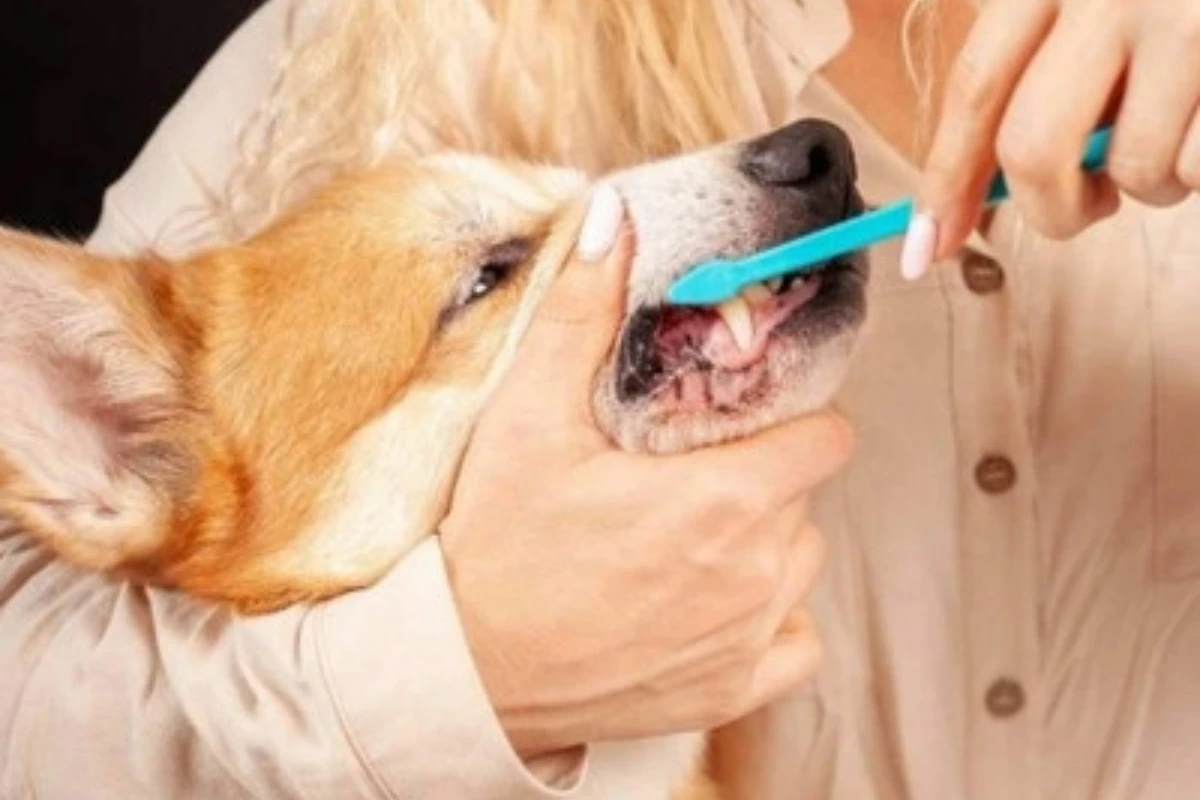
We all love a good sloppy kiss from our dogs, but let’s be honest: “doggy breath” can be overwhelming. While many pet owners dismiss bad breath as a normal part of owning a dog, it is actually an early warning sign of periodontal disease.
Did you know that by age three, over 80% of dogs have some form of dental disease? The bacteria involved don’t just cause tooth loss; it can travel through the bloodstream and damage the heart, liver, and kidneys.
Learning how to brush your dog’s teeth is the single most effective way to prevent this. While the idea might seem daunting (or even impossible) right now, with a little patience and the right technique, it can become a stress-free part of your daily routine.
Why Home Dental Care Matters
Before you grab a toothbrush, it helps to understand the “why.” After your dog eats, plaque forms on the teeth. Plaque is soft and easy to brush away. However, if left for 24 to 48 hours, it hardens into tartar (calculus), which acts like cement on the tooth.
Once tartar forms, a toothbrush cannot remove it—only a professional veterinary cleaning can. By brushing regularly, you are removing the plaque before it has the chance to harden, effectively stopping gum disease in its tracks.
Getting the Right Gear
You cannot use the same supplies you keep in your bathroom. Human products can be dangerous for pets.
- The Toothbrush: You have options here. A double-headed canine brush works well for large dogs, while a finger brush (a rubber cap with bristles) is excellent for beginners or small mouths.
- The Toothpaste: Never use human toothpaste. It contains fluoride and xylitol, both of which are toxic to dogs if swallowed. Instead, buy an enzymatic pet toothpaste flavored like poultry, beef, or peanut butter.
Step-by-Step: How to Brush Your Dog’s Teeth
Do not rush this process. If you force a toothbrush into your dog’s mouth on day one, they will run every time they see it. Break it down into stages over a week.
Phase 1: The Introduction
Start by letting your dog lick a small amount of toothpaste off your finger. Most pet toothpastes are designed to be a treat. If they like the taste, you have won half the battle. Do this for 2–3 days.
Phase 2: Handling the Mouth
Gently lift your dog’s upper lip to expose the teeth and gums. Rub your finger (with toothpaste) along the gum line for a few seconds, then immediately reward them with a treat and praise. This teaches them that handling their mouth leads to good things.
Phase 3: Introducing the Brush
Once they are comfortable with your finger, switch to the brush.
- Angle it Right: Hold the brush at a 45-degree angle against the gum line.
- Circular Motions: Use gentle, small circular motions.
- Focus on the Outside: You do not need to pry the mouth open to brush the inside of the teeth. The dog’s rough tongue naturally cleans the inner surfaces. Focus 95% of your effort on the outer surfaces (cheek side).
- Speed Matters: You don’t need to brush for two minutes like a human. Aim for 30 seconds total for the whole mouth.
Troubleshooting Stubborn Pups
If your dog growls or snaps, stop immediately. You never want to make dental care a battle.
- Go slower: Go back to Phase 1 for another week.
- Exercise first: A tired dog is often more compliant than a high-energy one.
- Start young: If you have a puppy, start touching their mouth today.
Learning how to brush your dog’s teeth is a commitment, but the payoff is huge. You are not just fighting bad breath; you are preventing pain and protecting your dog’s vital organs.
Be patient with yourself and your pup. Even if you only manage to brush half the teeth today, that is better than nothing. Keep it positive, keep it consistent, and watch your dog’s health thrive.
Conveniently located in Bettendorf, if you are searching for pet dental care bettendorf to assist with professional cleanings or oral surgery, we are here to help.
The experienced team at Maplewood Veterinary Center is dedicated to keeping your pet’s smile bright and healthy for years to come.
Frequently Asked Questions:
1Q: How often should I brush my dog’s teeth?
Ans: Ideally, you should brush every single day. Plaque hardens into tartar within 24 to 48 hours, so brushing daily is the only way to truly prevent buildup. If daily isn’t possible, aim for at least three times a week.
2Q: Can I use baking soda if I don’t have dog toothpaste?
Ans: No, do not use baking soda. It has a high sodium content that can upset your dog’s stomach and disturb their electrolyte balance. Stick to an enzymatic toothpaste formulated for pets.
3Q: My dog’s gums bleed when I brush; should I stop?
Ans: Bleeding is usually a sign of gingivitis (gum inflammation). It means you need to brush, but you should do so gently. If the bleeding is excessive or persists after a week of gentle brushing, consult your veterinarian.
4Q: Are dental chews a good substitute for brushing?
Ans: Dental chews are a great supplement, but they are not a replacement. Think of brushing as “flossing” and chews as “chewing gum.” They help reduce plaque, but cannot clean under the gum line where disease starts.
5Q: Do I need to rinse my dog’s mouth after brushing?
Ans: No rinsing is required. Dog toothpaste is formulated to be swallowed safely. In fact, many contain enzymes that continue working in the mouth even after you finish brushing.6Q: Why does my dog need a professional cleaning if I brush?
Ans: Even with perfect brushing, some tartar may accumulate over time (just like humans who brush and still see a dentist). A professional cleaning allows the vet to clean below the gum line and take X-rays to check for root decay.